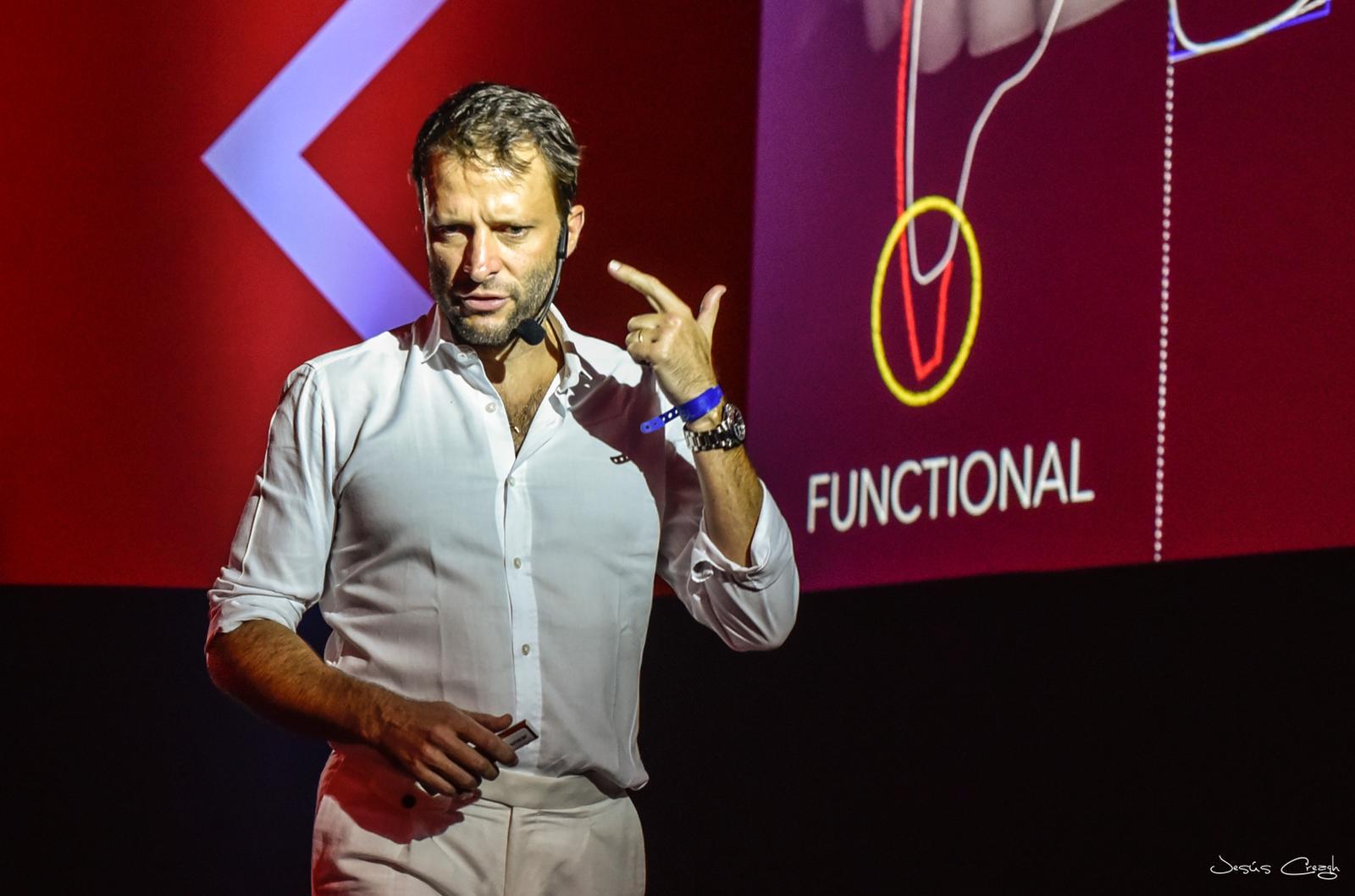

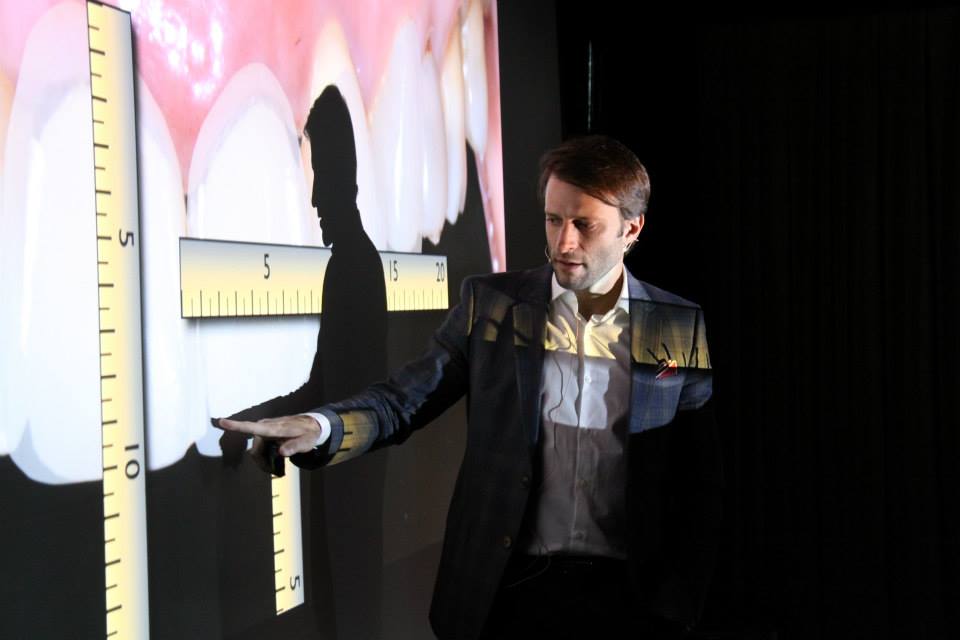
Learning the fundamentals and updates on Digital Smile Design by the godfather of Digital Smile Design himself: Christian Coachman (@chriscoachman)
Friday 2 and Saturday 3 April 2027, Amsterdam, The Netherlands
intro video
Technology changes how we work, but not what makes a smile beautiful. Learn to bridge the gap between your clinical hands and your creative vision to design natural smiles, regardless of the tools you use.
This one time only live course will take place on Friday 2 April and Saturday 3 April 2027 in Amsterdam, and tickets are very, very limited!

DSD Founder, Christian Coachman, is going back to his smile design roots to share with you his 20 years’ experience as a dentist, technician and smile architect.
Before founding Digital Smile Design, Christian traveled the world as a master dental ceramist, working alongside some of the best dentists in the world to design their patients’ smiles.
Through this course, Christian will share everything he has learned over the years as a high-end dental ceramist and digital dental lab owner to help dental professionals improve their smile design skills for better communication between clinician and lab.
Problems you will solve with this course
- You look at a smile, you know something is wrong, but the exact reasons are not clear.
- You don’t get from your lab the exact smile design you wanted. Not clear if the problem was your instructions or the technician’s lack of understanding.
- Not having the skills to actually perform a smile design yourself, when needed. If it’s a direct mock up, direct composite or a CAD project.
- Getting work from the lab and having a hard time evaluating if it’s good enough, where are the problems and what are the necessary changes.
- Not having a clear system to analyze work than by others and generating clear instructions of the necessary changes to minimize redos, back and forth.
- Not having the skills to change chair side mock ups, provisionals and final restorations. Every time work is not ideal, having to rely on others to improve it, give the work back to the lab and reschedule the patient.
- Having a hard time making patients understand that you are not only a great clinician but also a great smile designer. Patients taking your artistic skills for granted. Not generating differentiation as a smile designer.
When the smile design skills are crucial
- Analyzing smiles. What is visually comfortable and what isn’t, according to the esthetic norms.
- Instructing the lab/designer to perform smile designs.
- Performing smile design projects. Analog or digital. Diagnostic designs and restoration designs.
- Evaluating smile designs done by others.
- Communicating changes so others can execute.
- Performing smile design adjustments with your own hands. In a software, a physical model or in the mouth.
- Interacting with the patient about smile design. Listening, interpreting, explaining and convincing.
When is mastering quality smile design important ?
- The obvious one. It will determine the esthetic outcome quality of the treatment. For the patient, the esthetic outcome quality will represent the quality of the whole treatment. Patient will judge the esthetic outcome more than anything else. This topic is related to the DSD Guided Dentistry pillar.
- It will guide the treatment planning. Smile design is the starting point of modern treatment planning. Adequate smile design will function as an adequate reference for planning decisions. This topic is related to the DSD Comprehensive Dentistry pillar.
- It will influence the case acceptance process since a quality smile design process will facilitate the emotional link between patient and treatment plan. This topic is related to the DSD Emotional Dentistry pillar.
The technical part will be decided in 3 chapters
- The Diagnostic Design. Done before any treatment was performed. The ideal facially & airway driven functional-esthetic design that intends to show the discrepancy between where we are and where we should be. This ideal design is not influenced by any existing compromise and has the intention to guide the interdisciplinary exploration phase, decisions making and to find the best possible comprehensive treatment plan.
- The Restorative Design. Done before tooth preparation, when the only treatment to be planned is the restorative one. Either because we will do only restorative or because all other procedures were already performed. So it is performed post ortho/perio/surgery/endo and pre restorative. So this design is limited by the fact that only restorations and tooth reshaping is possible at this point. This design will guide the preps, provisionals and final restorations.
- The Restoration Design. Done after tooth preparation is performed. So this design is limited by the finishing lines of the preps, minimum thicknesses of the restorations, position of implants, gingiva and biomechanics of the materials. This design will be used to manufacture indirect restorations.
The program
Day 1
8:30-9:30am – registration and coffee
9:30am-12pm – Class 1
– Main concepts overview.
12pm-1pm – Lunch
1pm-3:30pm – Class 2
Dealing with compromised situation 1: Making teeth look longer/narrower
– Esthetic diagnosis with Keynote/Canva
– Design strategy
– Visual asynchronous communication workshop
– Demo execution on Exocad
– Hands-on model 1
3:30pm-4pm – Coffee Break
4pm-6:30pm – Class 3
Dealing with compromised situation 2: Making teeth look shorter/wider
– Esthetic diagnosis with Keynote
– Design strategy
– Visual asynchronous communication workshop
– Demo execution on Exocad
– Hands-on model 2
6.30pm-8pm – Welcome Drinks
Day 2
9:30am-12pm – Class 4
Dealing with compromised situations 3: From fake/bulky to natural/delicate
– Esthetic diagnosis with Keynote
– Design strategy
– Visual asynchronous communication workshop
– Demo execution on Exocad
– Hands-on model 3
Dealing with compromised situations 4: Fixing axis and interproximal areas
– Esthetic diagnosis with Keynote
– Design strategy
– Visual asynchronous communication workshop
– Demo execution on Exocad
– Hands-on model 4
12pm-1pm Lunch
1pm-3:30pm – Class 5
The Pink Restoration design strategy
Dealing with compromised situation 5: Ideal design for artificial pink
– Esthetic diagnosis with Keynote
– Design strategy
– Visual asynchronous communication workshop
– Demo execution on Exocad
– Hands-on model 5
3:30pm-4pm – Coffee Break
4pm-6:30pm – Class 6
Dealing with a compromised situation 6: Avoiding the “banana look”
– Esthetic diagnosis with Keynote
– Design strategy
-Visual asynchronous communication workshop
– Demo execution on Exocad
– Hands-on model 6
Conclusions
Location
2 and 3 April 2027
Capital C Diamantbeurs
Weesperplein 4B
1018 XA Amsterdam
The Netherlands